|
 |
RSS Feed  |
a playground of art, photos, videos, writing, music, life |
|
|

You are here
|

Creativity!
|

Get it!
|

I like it!
|

Fun stuff!
|

About me...
|
| |
|
|
|
|
Random Quote
Opportunity just exists in the air for a few minutes. If you don't obey your gut feeling right away, you've lost your chance.
-- Ken Hakura
|
|
|
|
|
|
Page Through Blog: << More Recent Posts | Home Page | Earlier Posts >>
Blog Archive by Month | Blog Archive by Story or Tag | Search Blog and Comments
That Jimmy Carter has a strong opinion about George Bush is not offensive. No big deal. That Jimmy Carter wants to pass off any strong reaction to his strong comments as "maybe misinterpretation," which implies that the listener got it wrong, is odorous. Interviewed on the TODAY Show about the comments, Carter said, "They were maybe careless or misinterpreted." He said he "certainly was not talking personally about any president."When pressed by NBC's Meredith Vieira as to whether he was saying his remarks were careless or reckless, the former president said, "I think they were, yes, because they were interpreted as comparing this whole administration to all other administrations." Emphasis mine.Ah, it's you, see. The one listening who is the problem. You interpretted the comments poorly. Either belly up to the bar and speak it out, or don't, but if you put it out there, don't crawl away from it by blaming it on a misinterpretation by those who heard you when you said, "I think as far as the adverse impact on the nation around the world, this administration has been the worst in history." How can anyone misinterpret that? He was blatantly "comparing this whole administration to all other administrations." Never blame the listener for hearing your clear comments as you gave them. You come across as an egotist and a buffoon. You either misspoke. Or you said something you shouldn't have said publicly. But misinterpretation on the part of your listeners is not the error of your words. |
|
|
In the military, it's a common practice to create an opposing force and then play out a war game, with each side trying to win. It helps the military grow stronger, more ready to wage combat. Business doesn't do this. Not really. You can make the argument that where the military doesn't have any competition until a time of war, these exercises are necessary to prepare for real battle. Businesses, on the other hand, do battle every day with their competition. Is there a need for war games? I would argue that there is - especially for large enterprises. Large companies don't turn on a dime like nimble startups do. As we've seen in the war on terror, our military "wins" on a regular basis against combatants. But still, in the grand scheme of things, perhaps not. Our enemy does many things that they ought not and they do a great job of getting their message out through the press. Many war games pre-9/11 weren't ready for the way in which our new enemy engages us. We have learned to adapt, but painfully and at times awkwardly so. Think of business. It's not the common competitors that will upend a company, but the upstart that does things in ways they "ought not." So here's a thought: why shouldn't large enterprises fund "pirates" in their organization, to conjure ways to defeat the company? Why not have a clever and strategic group ferret out a startup that would specifically kill the company? Then have the bigwigs look at the scenarios presented by the threat and determine if it is in fact a business killer. And if it is, why not fund the very startup that would attract customers and capital? It's silly to expect the entire enterprise to change. But why not fund the offshoot uninhibited by bureaucracy? And then reap the reward for stockholders by doing the very thing your competition least expects you to do? Because in finding a way to usurp your own business position, you also usurp that of your very similar competition. And further, you dominate. |
|
|
"That was well-listened." Ever heard someone say that? Me neither. I have heard: "That was well-spoken."
"That was well-written."
"That was well-articulated." We put an emphasis on what goes out - not what goes in - and in a collaborative world, that just might be an oversight.You can easily find training to improve the presentation of your thoughts to others, but it's rare - if not impossible - to find training in receiving others' thoughts. Why is that? Perhaps because there are rewards and recognition for writing and speaking well. You can get a Marconi for radio broadcasting. You can get a Pulitzer for journalism. Toastmasters will celebrate your excellent speech. It's a very good thing to be clear in your communication to others. It's also a very good thing to be able to unwrap and explore the gift of others' thoughts. This is an age of unprecedented partnership and teamwork. Where 1 + 1 can equal 3, or 9, or 27. Listening is the key to working well with others. Listening makes you attractive; you are always welcome when you listen well. At the encouragement of my good friend, Mike Sansone, I will most likely be writing a lot more on this subject. |
|
|
I went to Georgia with my bff Tamara for Mother's Day Weekend. We had the best time.   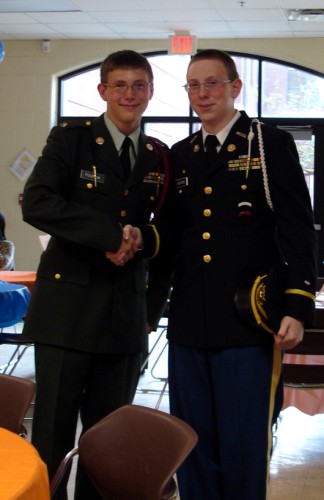     You know it's good when you just want to hang out together all the time. We had some great conversations, and some of that will be coming forward in what I post in the next week. |
|
|
I get an email from a friend who asks, "Why are some of the links on your site not working? Still in progress?" The answer is yes, still in progress. I'll put up dummy pages as placeholders in the meantime sometime this evening. 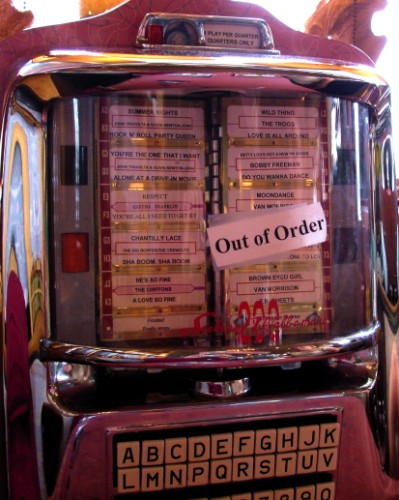 |
|
|
Cub and I spent some time at the creek behind our house. Cool place. 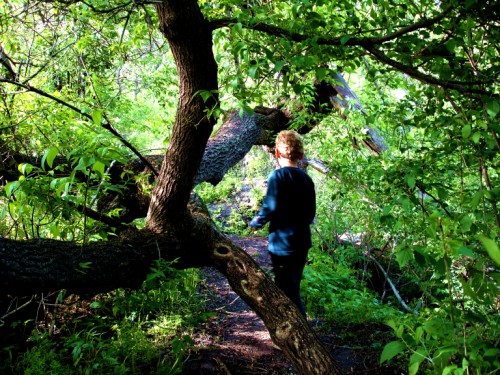 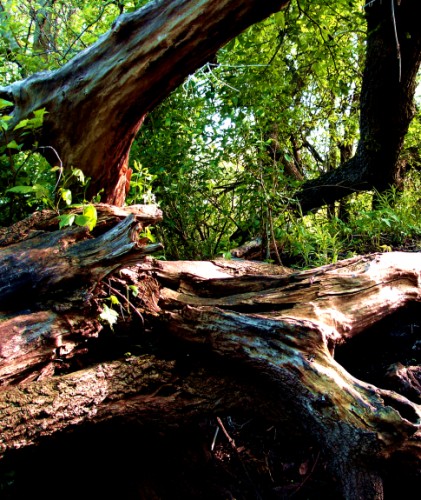   |
|
|
Purple, Blue, Yellow, and White |
I spent ten minutes sketching our young maple in the backyard. 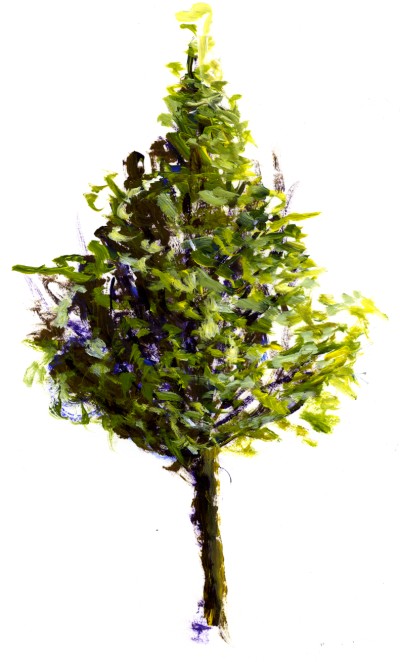 I don't know that I have it right, but I like this better, and it was fun to do. |
|
|
After spending some time quick sketching trees yesterday, I broke out my art books and went for a couple of walks with Tamara where we studied and discussed trees. Art, like anything else, is a discipline that takes time and study. While a person has to have some innate talent from which to forge their work, the "how" of it all is a matter of looking at real life, looking within oneself, and looking at others to see how they do it. So I rounded up some variety in rendering trees. What follows are ways in which various artists, both famous and not so famous, have painted trees. Kinda cool to see them all together. (I'll continue my own stutdies and spend more time practicing, and post the results later.) 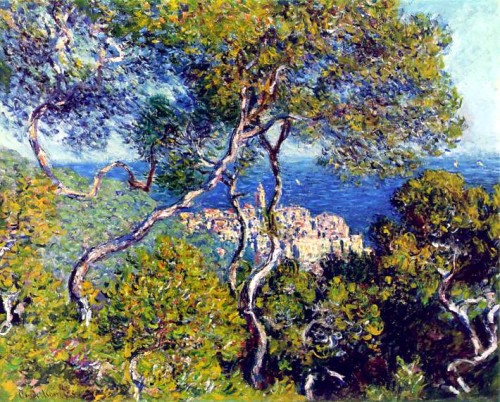 Bordighera - by Claude Monet Look at how he layered it up, from the background cerulean sky, moving into darker blues, then deep purple for shadows, then lighter colors, painting each leaf. 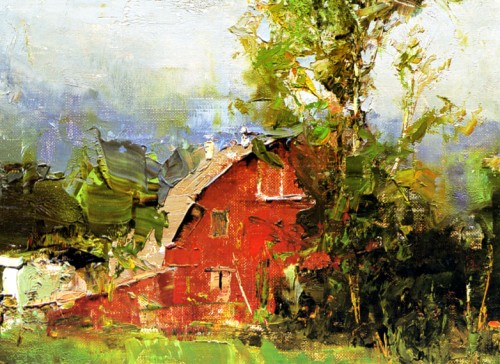 Cascade Barn - by Richard Schmid Schmid is an amazing teacher. He normally paints with brush, but used only knife in this painting. Notice the striations of straight colors - little mixing in parts. I've used that technique in some of my paintings, and I like it a great deal. It's a wonderful way to get vibrant colors for the eye to mix. 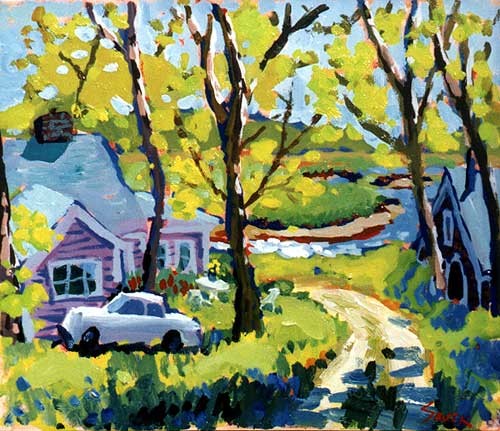 A Place on the Pamet - by Charles Sovek Sovek is a fairly well-known northeastern artist. His use of color and line is so carefree. Look particularly at the tall tree on the left and the color within it throughout. 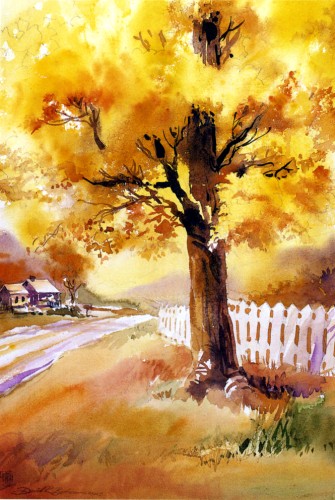 Autumn Road - by David R. Becker Becker is my favorite watercolorist, and he is a master. There's not a bit of green in the tree - you can just feel the sunlight in the leaves. Notice the pencil lines he has in his work in the upper left of the tree. That kind of simple texture is perfect. Now notice it throughout the the rest of the work. 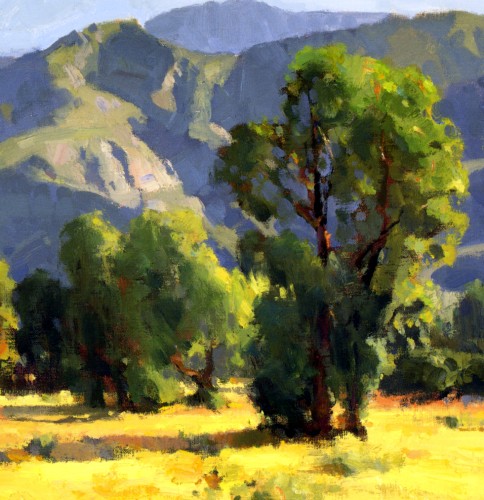 Palm Desert - by Kevin Macpherson Macpherson does some great landscape work. The trees have a wonderful range of value and color, and his sense of light is quite good. 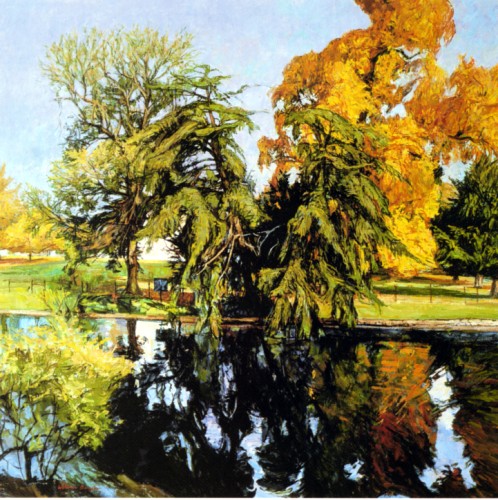 Golden Tree - by William Bowyer Bowyer is unafraid to use strong black shadows to give his trees depth. I don't find that in many other artists. 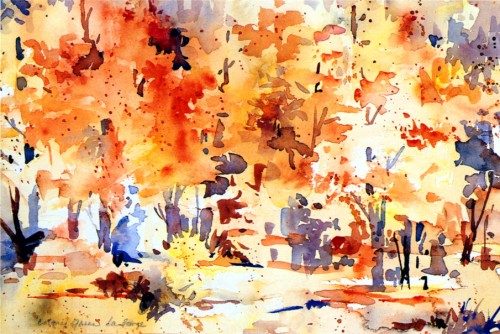 Anticipating Connecticut - by Mary Green LaForge Terrific abstraction. Almost vague, but somehow you know it's a portrait of fall foliage.  El Grande - by Harley Brown Cowboy artist Harley Brown paints the periphery of his paintings without much detail to approximate what we actually see: great detail at the focal point of our vision and fuzziness at the sides. His trees are never sharp, but loose and airy. (Look at how real those columns in that arch appear... that's rich stuff.) 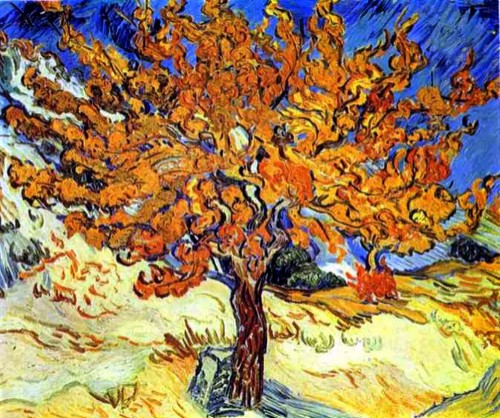 The Mulberry Tree - by Vincent Van Gogh And of course, the surreal emotion and color of Van Gogh. The tree bursts with vitality, almost aflame. Take note of how the ground lacks color to draw you into the leaves. Everyone does it different. Pretty fun to see all of this in study. |
|
|
Does it matter what color I paint a tree? I didn't choose green, but a red, a blue, and Yellow Oxide. I sat on my back deck and tried different colors and techniques. I like something in all three sketches, but I like the third best. Each was done in about 5 minutes' time. 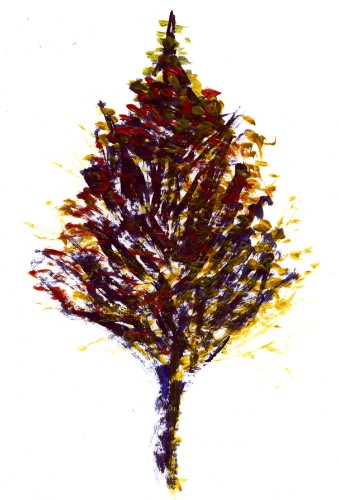 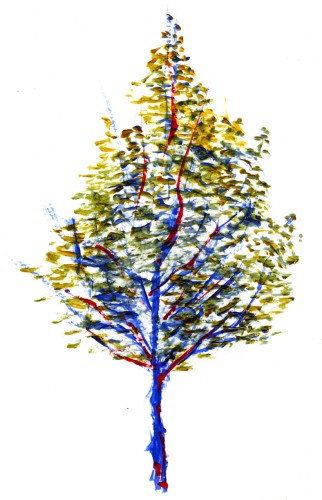 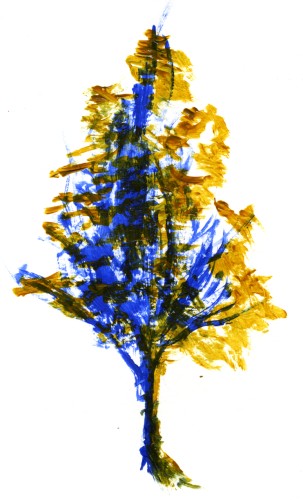 Also, we watched Freedom Writers tonight. An absolutely fabulous movie. Loved it. |
|
|
Last fall, I was in Georgia visiting my future in-laws and while sitting poolside, I broke out a brush and tried sketching one of the palm trees in the backyard. 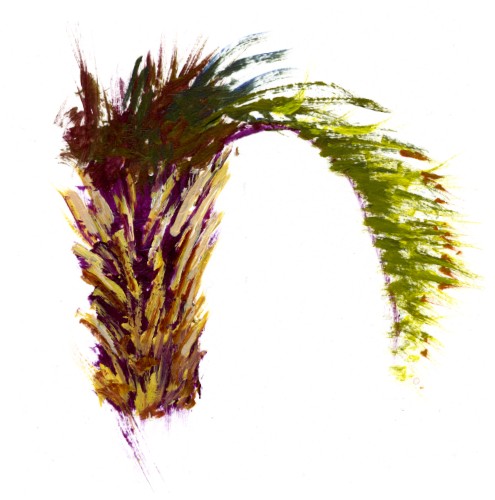 This sketch was just a partial work because I was only after capturing the unique texture of a palm tree, but with grass, hair, leaves, and other complex subjects, it's tough to get texture right. It's a balance between approximation and exactness. There are some folks who do very well with it. I've never really painted clouds or trees. I've had to tackle grass and hair. But maybe I'll try a detailed cloud setting soon just to take a whack at it. |
|
|
|
|
|
|
|