|
 |
RSS Feed  |
a playground of art, photos, videos, writing, music, life |
|
|

You are here
|

Creativity!
|

Get it!
|

I like it!
|

Fun stuff!
|

About me...
|
| |
|
|
|
|
Random Quote
There are three rules for writing a novel. Unfortunately, no one knows what they are.
-- W. Somerset Maugham
|
|
|
|
|
|
Page Through Blog: << More Recent Posts | Home Page | Earlier Posts >>
Blog Archive by Month | Blog Archive by Story or Tag | Search Blog and Comments
Not only did we have a fabulous Christmas day at my daughter's home, but upon returning today, I tried a new technique with my scanner and discovered that when combined with CorelDraw, I get brilliant and accurate images of my artwork! Take a look at this, taken with my digital camera: 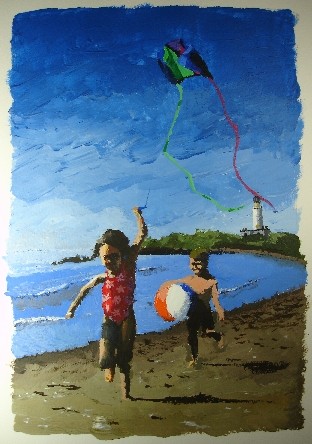 Then look at this, scanned at 600 dpi and then managed by CorelDraw:  Yayy! My gallery online shows the new images of my latest work. |
|
|
Today, I had to take Nick to the local craft store to get some things for his girlfriend, and while there, I picked up four brands of acrylics paint, all raw umber. - Grumbacher Academy
- Golden
- Winsor & Newton Finity
- Liquitex Heavy Body
I had no expectations going into this. I currently own Dick Blick, and the paint has been adequate, but the tube of Dick Blick's raw umber that I have looks like curdled milk when it comes out of the tube. Needing a replacement, I saw this as a great opportunity to find a brand for my future purchases.My criteria for determining a good paint is that it should be consistent, smooth, but heavy enough that it doesn't lose its color when a brush cuts into it, once applied. In other words, if I paint a stroke, I expect the paint to stay where I put it. And how well can I paint a thin line with it? Let's find out! Here are my results, from worst to best: 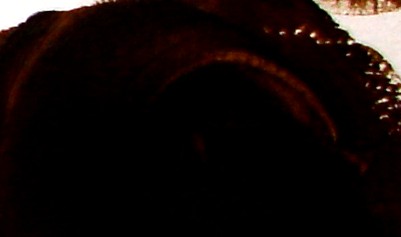 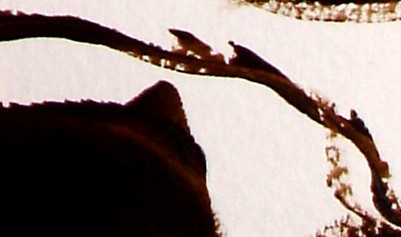 Worst: The Liquitex had very creamy quality to it, but when painting, as you can see, subsequent brush strokes would cut into my previous brush strokes. Once I paint something, I expect it to stay put. Not true with Liquitex. The lines also show the weakness of the paint. Next worst, surprisingly (given all their hype in the art community), was Winsor & Newton. 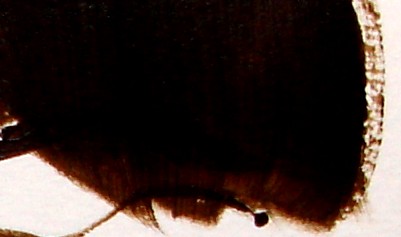  I found that I constantly had to paint over an area to make it keep its color. The brush slices right through the applied paint. You can see this in the example swatches above, especially in the lines... that's just awful. Both of these paints, the Liquitex and the Winsor & Newton Finity, had a lighter brown appearance than the other two paints, and they fared poorly by comparison. This suggests that maybe they put too much water in the paint that it won't hold up to actual, you know, painting. Next, Grumbacher Academy, which was the least expensive of the tubes that I bought and is supposedly a student quality of paint, and yet, it was nearly as good as the best of the brands that I've now tried. Here's the Grumbacher swatch: 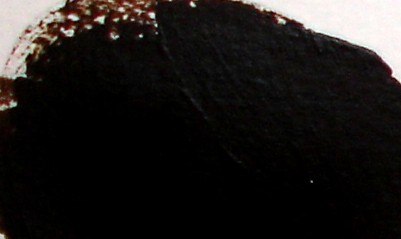 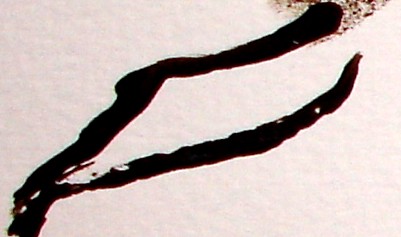 Smooth, even color. When painting on the edges, it wouldn't sink into the texture of the paper, but when painting over a previous painted area, the acrylic didn't budge. A fine paint, to be sure. Grumbacher is a brand that I've used for watercolors and have always enjoyed their paints, so I was pleased by the results of this test. And the lines are strong. And the winner, even by those in my house who didn't know my criteria: Golden 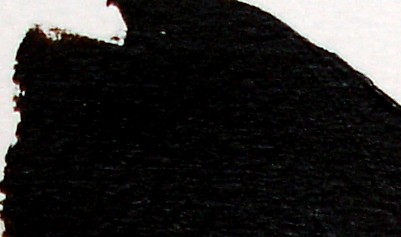 Not only did what I paint stay just as it was when I first laid it down, but the edges sunk into the paper's texture for an even look. Further, it even had the best lines. 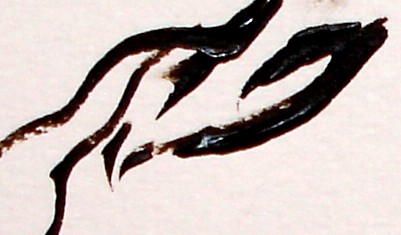 I could go thin with the line and the paint still held up well. So, I've tried five brands of acrylics, and the clear winner was Golden, which I highly recommend. And if you're on a budget, Grumbacher Academy is a great paint for the price. |
|
|
|
|
"“Value innovation is about making the competition irrelevant by creating uncontested market space. We argue that beating the competition within the confines of the existing industry is not the way to create profitable growth." --Chan Kim & Renée Mauborgne, from Blue Ocean Strategy To create uncontested market space may seem like its an outrageous proposition, but I think it's much easier than we might expect. The key hallmarks of great market space: - People are standing or sitting around waiting to do what they need to do. (Browsing your product breaks the boredom.)
- Competitors aren't there in that space because it's not large enough, perhaps.
- Your product and marketing appeals very much to the demographic in that market space.
In marketing my forthcoming greeting cards, people might expect that I would like to get my cards in grocery stores and into Wal-mart and big chain stores like that.Nope. Not where I want to be. I want to go where they aren't, which makes my competition irrelevant. |
|
|
| | | | |
Here's a strange twist: some moron has programmed a bot to advertise through comments on my web site. That's not unusual if you're on Blogger or something; that's millions of web sites accessible through the same code written to leave a comment. But this site was written by me, and I know that my method was unique to this site. How desperate do these guys have to be to spend time coding their advertisements for my little web site? Good lord... Fortunately for me, I get an email right after they post a comment and so I can usually delete it within 30 minutes of the comment being posted. But still. How dumb. And what a waste of time for them... I've changed the commenting process so that those posting a comment need to check a box. Will it stop them? Probably not. But I'll change it again later if they figure it out again. Jeez... |
| | | | | |
|
|
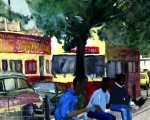
During a break in work today, I started this and have now finished it. Looks like fun to be where they are, eh? I still have yet to find a decent digitizing process. I'm not happy with my scanner, and my camera puts a gray-ish filter on the pictures that it takes. Plus resizing the picture pixelates it. Oy... The best process that I've found is the color copier at Kinko's. Oh, that I could find a scanner that could duplicate that imaging... |
|
|
 ETC: And just because I think it's cool, here's the palette I used: 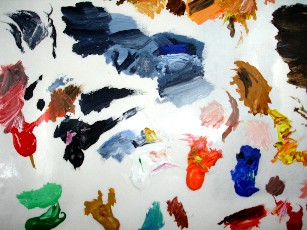 Blobs of color take shape and form and become something you create with hundreds of brushstrokes. How crazy! |
|
|
|
|
Books rock. Yesterday, I received Sandra Miller Louden's book, Write Well & Sell. It's the only greeting card book that I could find and while it's not about the retail side of greeting cards, it gives a peek into the greeting card world. Surrounded by books like hers, it's like having seasoned, best-of-breed experts here to teach me what they know. I have about 30 business books that span marketing to accounting to project management. I don't understand how a person can't like reading books... In Ms. Louden's self-published book, I learned that 95% of the buyers of greeting cards are women. The industry sells over 8 billion cards a year. Birthday cards are the number one market. Louden specializes in writing verse/text for greeting cards and the book is mostly about that. Good stuff. She says:
My own theory on new card companies is that they are often started by people who have the idea it would be fun to make cards; these people often being frustrated writers, artists, or photographers. Once they start the company, they quickly find out the challenge isn't creating a line of cards, it's marketing them in an already crowded arena and selling them to the consumer who has thousands of other cards from which to choose. There are still many "niches" out there waiting for an innovative card company to fill; unfortunately, many new companies run out of money, time, and patience before they find that niche. She gives categories and sub-categories of cards. Here are the categories: birthday, friendship, anniversary, life transitions, seasonal, get well, and then miscellaneous, such invitations, thank you, and supportive, and so on. It's a big market.I've been doing some research on my own by going into stores. I'll need to come up with a display stand of my own to make it easier for retailers, as Hallmark (of whatever company is featured) owns the card stands that you see in stores. Enter the engineering aspect of this. Will mine be end cap? Point of sale? Should the display be engineered to allow for both? Probably. Cards are an impulse buy, so the location of the cards in the store don't really matter so long as it is a trafficked area. Should the cards be blank? Have some generic text in them? The outside of my cards won't have writing, so I can't go for the hook on the outside and then the punch line on the inside. Lots to consider, but I'm surrounded by the wisdom of others who can give me great advice in the form of their books. Between the inventions of the press and the Internet, there's a lot of smarts for me to tap, right at my fingertips. Entrepreneurs never had it so good. And if you like, you can see the "look" of the Art by Brett web site, which is done, though none of the links work. Just go to the site and take a peek. |
|
|
Marketing has to penetrate all that a business does. And it doesn't have to seem obvious to the shopper... marketing can be seamless in just doing business. Last night, I built the database for the shopping cart on the ArtByBrett.com web site. In the next two weeks, I'll create the pages for the cart. PayPal will inherit the transaction details and process the payment, and then will send the payment approval information back to my site so that I will know to process the order. One of the reasons I want to develop my own cart is to allow for some of the marketing options, such as coupons and affiliate sales. Why not allow bloggers and other web masters get some credit for redirecting someone to a completed sale on my site and make some money for themselves, or allow them to build credit and get cards for free in exchange for the link? I spent time with my mom yesterday teaching her to paint. Prior to yesterday, she would tell you that she couldn't draw a stick figure. Not so now. She knows that she can, and she understands what I say when I tell her that drawing and painting are all about how you see things. She successfully painted a picture of a complicated porcelain dish. Lesson Two in the week after Christmas... She and I talked about different strategies for selling the cards. I have a few counterintuitive angles that I want to try and I bounced those off her. Mom's a smart woman, and her feedback is always valuable. I'll need some people to try the shopping cart features after I get them built. If you'd like to give it a trial run when I'm ready, send me an email and let me know. |
|
|
|
|
Today, I did some work on the model for ArtByBrett.com (domain purchased, but no web site yet...) and in the course of my work on it, I checked out the process for obtaining bar codes. Why? Because if I am to sell greeting cards through retail stores, then having a real UPC on the back of the cards will help the retailer and enhance my legitimiacy. So... I visited this page and went through the process far enough to see what the price might be. For 100 bar codes (100 products - have to think ahead...) the price was $750, with a $150 annual renewal fee. That's not bad at all, really. That means that my cards would have a unique code in the retail environment all their own. So for the printer fees and the bar code purchase, I'm well over $1,000 to get started at this. There's the risk for me, financially. If nothing sells, that's what I lose. That's okay - it's worth the dream. Between now and mid-February, when I plan to start selling my cards, I have to paint 8 sellable card designs, and then write a customized shopping cart that integrates with PayPal. I've decided to go with PayPal because the fees are reasonable and I can create the order number and order details in my own database, and then hand off the order number and total sale amount to PayPal for payment processing. Or, I can allow the buyer to print the invoice and send me a check referencing the order number, if they don't like PayPal. I've been down this road before when I sold my own software. The only difference is that now I'll have inventory - lots of cards on-hand. Software is virtual, unless people wanted the software on CD. I've worked through the business model, thinking of every possible expense that I can and building a spreadsheet to represent cash flow and margins. I came up with the text for the "About" page. Here it is: When I first began to paint, I painted cards for people on special occasions. It surprised me to see how touched they were to receive them, and how long some kept the cards displayed - even to go so far as to frame them! I realized then that if a card has the quality of an art print at the cost of a greeting card, the remembrance that went into sharing such an affordable card lasts a very long time. And so, Art By Brett was born. It's my hope that what you find here helps to bring smiles and feelings of warmth to the people who receive the cards you give them.
And then the goal is to come up with 3 to 4 new cards a month and add to the product mix. By next Christmas, I should have several Christmas cards from which to choose.So I'll have two store fronts: retail stores and my web site. Bulk and package pricing will be available from the web site, where in the store, it will be only individual cards. I groove on this sort of thing. In the next week or so, I'll receive my latest book purchase from Amazon: Execution: The Discipline of Getting Things Done. From the marketing blurb on the Amazon for the book: Execution is "the missing link between aspirations and results," and as such, making it happen is the business leader's most important job. While failure in today's business environment is often attributed to other causes, Bossidy and Charan argue that the biggest obstacle to success is the absence of execution. It's not smarts or talent or even luck... it's just getting it to market and putting one foot in front of the other and not giving up along the way. It's putting your money where yours dreams are. A lot of people fantasize about winning the lottery, but the odds are so unbelievably stacked against them that it's truly money lost in sum of the chances taken. But pursuing a business has much, much better odds. Plus you learn a great deal along the way.I often try to get people to pursue their dreams. But I'm constantly shocked at the number of people who can't budge from that steady paycheck, despite the greatness of their idea and their own potential. I've learned to stop encouraging after a certain point. If they doubt it themselves, it's better that they don't risk it. For me, I've started quite a few businesses. None have brought me wads of cash. Thankfully, the majority of those paid the bills. Through the years, it's been a wash though. So why do I keep trying? For me, it's the freedom of getting to choose how I want to spend each day if I do get ahead of the game and find the model that truly works. So, scheming here at my drafting table is fine, but it's all about execution and then not taking "no" for an answer. Persistence. Drive. Heart. And utter belief that I can do this. I never finished college and have never had a computer class or an education in art, nor have I had any business training. But I am surrounded by a great library of business books that I've purchased and read. And the knowledge of what failed and what worked in my previous endeavors. I think that anyone can jump in and make their own business. Americans began as a largely self-employed lot. In Lincoln's day, it was looked down upon to work for someone else. Self-reliance was the mode. Industrialization brought an end to that. The move toward factories had people moving from farm to city and 100 years later, you needed big bucks to start your own company. But that's not true today. Computers and the web offer cheap store fronts for about $12 a month. People spend more than that for cell phones and cable TV. Or lottery tickets. I love success stories, like this one. They arrived in this country with little money, relying on the American dream that hard work and determination would lead to success.
Bilich and her husband, Bos, brought their two small children to Rockford from war-torn Bosnia in 1994. They have since opened a masonry business, Bos & Son, which saw $800,000 in sales this year. A lot of people have talent in something - they just need to make the leap, but they're afraid of risk.I read an article online a few years ago that talked of that problem in Scotland. [Nicol Stephen, a government leader] was launching a report calling for radical changes to the way in which enterprise is taught in schools. He urged the business community to see risk and failure as part of the normal path to success and said it should stop "sitting back" and criticising teachers for the state of enterprise education.
Highlighting attitudes in the US, he said that American entrepreneurs may fail not just once or twice but several times before they make their first million. "We must be prepared to try and try again." Similarly there were a couple of other articles that I saw at that time... the links are now dead, but a Harvard business guy said this:There are many countries -- Japan, Norway, Russia, even England -- where if somebody succeeds, people are sort of mad at them. They used to say there's no sense in being an entrepreneur in France because if you fail people think you're stupid, if you succeed people think you're a crook, so you can't win either way. And this from an article about entrepreneurship in Africa (again, the link for it is dead.)Once upon a not too long past, the word "entrepreneur" in Nigeria was a dirty word, and to a large - too large - extent, it still is. Nigerian kids went to school and learnt to become good employees. The investment and industry was left to foreign investors, and, for some time, it worked. The shame is that now, it"s not working, but little else has changed. My concern is that that sounds more like America every day... we lampoon "the rich" and wonder how they're rigging the system to make it, as though that were the secret... or we wonder how they inherited their money to keep making money as they do. But that's not it at all.We need people to take risks and not be tied to the paycheck and the security of that. And entrepreneurs need to be rewarded for their risk. The classic entrepreneur tries a new business more than once before succeeding. This is so important because most people learn by doing and most people who've never run a business don't know how. But if it's okay to fail, then you learn and try again and you get smarter and eventually succeed, whether you started with money or not. (Soapbox: if they figure it out and get rich, it's important that we not tax the bejeezus out of them - because they'll most likely try again and create more jobs in the process. I've never met a successful entrepreneur who got wealthy off a well-executed idea and then stopped there. But I have met those who stopped because of the regulatory climate.) So, with the new year coming, I hope that among those talented folk I know - which includes everyone who reads this blog regularly - I hope they work to make real their own dreams and try to execute and become successful with them. I know one who has begun to make the leap and I know that she'll succeed. I hope others follow suit. I triple dog dare you ;) |
|
|
|
|
|
|
|