Some people spend their weekend doing fun stuff. I'm spending mine coding. I have no problem with leisurely activities. I'm envious, in a way. But I know why I'm doing this. I'm driven today so that I can be driving tomorrow...
It's been my experience that people begin to get angry when things don't go as they expected. Whether their children didn't behave as they wished, their belongings weren't where they left them, their project didn't proceed as planned, or other drivers didn't drive safely around them on the road... everyone has expectations. When circumstances circumvent our expectations, it can annoy us and lead us to anger, if we let it.
Think about that the next time you find yourself steaming... what expectation of yours went awry?
Which is why, I think, that so much of life tries to set things on a course for an expected outcome. We give our children rules, our belongings a place, our projects a project plan according to the guidelines of project management, and laws for driving. It's all about leading our expectations.
Let's call that civilization - a coherent set of rules upon which most of us agree to live. Civil-ization: the polite society. A world without anger.
Happiness... right?
My son asked me the other day about what makes for happiness. It was a discussion he'd had in class at school. When he asked me for my definition, I told him:
Happiness is a choice.
That threw him because it wasn't like the answers he'd heard in class from his peers. So I explained.
What are the worst conditions you can imagine - those in which no person can possibly be happy?
Human potential has no limit as long as you believe you can do it and are willing to work hard enough, said a former POW who spent nearly seven years in a prison camp during the Vietnam war, only to emerge to be fluent in Spanish, a world record holder in jump roping and with the ability to do thousands of sit-ups and over 300 pushups continually, all from experiences in prison.
The crux of Hubbard's speech was that anyone can overcome adversity and reach beyond the loftiest of goals by developing a positive, focused state of mind.
"Without a focus and a game plan to improve myself a little more each day, I would never have survived in a North Vietnamese prison, much less life after prison," Hubbard said.
Living on only 300 calories a day, consisting of a bowl of rice and a bowl of green food that was commonly called "weeds," served twice daily with two cups of water, Hubbard worked his way up to being able to do 300 push-ups and 2,700 sit-ups, and six hours of jump roping continuously. Also, using a tapping code on the wall of his cell, Hubbard, who had never known any Spanish, learned the language fluently and memorized a 46-verse poem without ever seeing or hearing any words.
How would you be in that environment? Pissed? Depressed? Suicidal?
For the first 150 days in the prison, he sat around feeling sorry for himself, but then decided to make a change. "At that point I decided no matter what happened I would never, ever have a bad day again," Hubbard said.
He said that he "decided." It was a choice for him to not have a bad day - amidst the worst of human conditions.
Rules won't make people happy. It won't make society polite. Despite all of the laws, divorce still usually ends in bitterness, people still kill other people, and politicians - the lawmakers themselves - steal on a regular basis from taxpayers.
Happiness doesn't come when all of your expectations, needs, and wants are consistently met. Happiness comes when you find yourself unlocking your own human potential and you see the world through eyes of thankfulness. If you have that, chaos can abound and it won't matter. Like Ed Hubbard, you'll stay positive - because you choose to be happy.
Kelly mentioned this guy, Tommy Emmanuel, in the comments, and referenced a different video, which was quite remarkable. So I watched that and several others and just watching the different techniques this guy throws at this song blows me away.
I'm one of those people you hate - that person who hits the pillow and within the span of two minutes, I'm out.
There's a reason for that... it didn't used to be that way. I trained myself. It was once the case that I would lie in bed at night and waste a couple of hours trying to sleep. Frustrating, which of course only made it worse.
Then I happened on the thing that helped...
What I learned about myself is that I couldn't sleep because I thought too much. Or rather, that I couldn't ignore my thoughts. At any given moment, thoughts would drift through my head. And at night, in the quiet of it all, thoughts were these noisy attention-getters waving for my attention. So I'd grab one and think about it for a while. Then another would hearken, and so on, and soon it's too late for me to get a reasonable sleep.
Sound familiar?
This came up at a discussion I had in a chance meeting during a brief stop at Panera with Angela Maiers and Mike Sansone. So I told them how I overcame this predicament.
At that time when I was plagued with a perpetual lack of sleep, I used to like to listen to music in the dark. The sounds were more vivid, I think, for the lack of distraction. Kind of like listening to music with headphones, if you know what I mean. So late at night and in the dark, you'd find me on the apartment living floor lit in the LED glow of my roommate Larry's Marantz stereo.
Well, I bought a boom box. And when I took a shower, the boom box started to accompany me. Fun to sing in the shower. One day, I accidentally bumped the light switch while plugging it in, and so I decided to just take my shower in the dark. Was pretty cool. But that later progressed to turning on the shower as hot as I could stand it and sitting in tub with the water raining over me in the absolute dark for 15 minutes. Which became habit. And what I found was that if I removed the music, it was kind of like sleep. Thoughts were there, but instead of grabbing them, I would just watch them float by. And that too became habit. As did immediate sleep, because instead of thinking, I would focus on letting my body sink into the bed. By the time that every muscle was relaxed into the mattress, I was, miraculously, out.
I have no idea why Sony, a really large company, wants to ignore such a significant part of the male population, but it does.
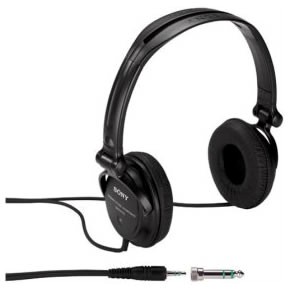
I own a pair of Sony headphones. Note the very hard plastic headband.
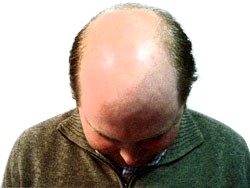
Wear that across your naked skull for more than 5 minutes and you have a headache. Guaranteed. So I wear the headphones with the band off my head and to the back, which is at best awkward and probably looks retarded.
Hatin' on the bald man...
Tired of this, I went to Best Buy tonight. I figured that since my Sony headphones cost me all of $30, I would get a more expensive pair. With padding. In the past, I've always liked Sony headphones. But then prior to this pair, they always had padding on the headband.
I browsed all of the Sony headphones. The $65 pair. The $79 pair. All of them featured the hard plastic headband. Except for one pair: the Bluetooth-enabled, headband-padded pair that sold for only $229.
Now, I just want to say... I love music. I love the nuances of music that only a great pair of headphones can expose. But no pair of headphones is worth $229 when all I really want is comfort. Is it too much to ask that I not suffer a headache when I listen to music?
Hatin' on the bald man. Or, maybe Sony needs some bald guys in their quality assurance department. None of the Sony headphones under $100 would have made it out of the room.
"Ouch! Do it over!" would have been the cry from the tester to the clueless engineer at Sony.
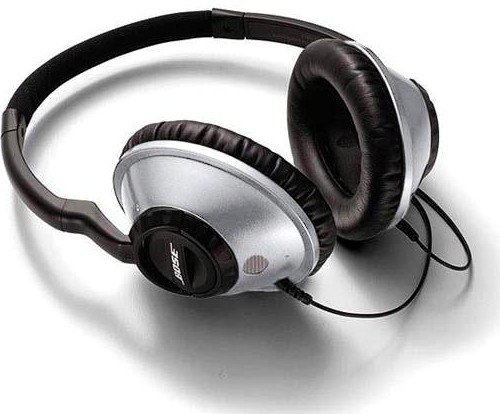
Sony lost me today. I'm now a Bose fan. For $139 (which was hard to do, but I do love music) I bought the Bose Triport headphones.
Notice the headband; it's very comfortably cushioned.
Bose did a smart thing. There was a Bose display and I could try out the headphones before I bought them. Very nice.
Sony? Not at all. In fact, the Sony headbands were hidden by packaging cardboard. I had to ask a sales associate to help me learn that every pair was adorned with that hard, scalp-crushing, unyielding plastic headband.
I like my cushy Bose headphones. They love on my shiny bald head while I listen to fabulous music.
Companies are, by and large, really bad at interacting with their audience. Companies create this really big counter across which they do business.
Ignore those behind the curtain. Focus instead on the great and powerful Oz...
You see, corporate big wigs are worried about lawsuits and trade secrets and proprietary information and embarrassment. That is so very much the wrong concern.
What the big wigs really need to worry about is something that never occurs to them - the secret sauce that happens where the customer interacts with the front-line employee. That's where all the money is made. So many great ideas and opportunities happen right there. But few employees are trained to recognize them, and managers - particularly those higher up - are never close enough to see it even if they are trained to recognize those nuances of better business.
What would happen if you brought the customer into the company, behind the curtain, and let them interact with you on business development?
Non-disclosures and secrecy and hush-hush. Compliance and regulation. White knuckles abound.
My goodness but that takes all of the fun out of it. Gone are the spontaneity and creativity of freeform innovation amidst the eggshell back-pedaling that happens at the introduction of a new idea. And yet it's the customers, if they were allowed to just open up and talk about their experience, who would help every employee see a better way.
What if a company openly put their ideas on the table and encouraged people to chime in and help grow the concepts?
Of course, like all other consumer goods companies, Kraft has an open line to its customers, toll free numbers where customers can call with questions, complaints – or ideas for new products or improvements. In the past, however, nothing happened with this input. The WSJ quotes Mary Kay Haben, Senior Vice President for Open Innovation at the company, "We would have said, 'Thank you, but we're not accepting ideas.'"
This has changed now with the launch of a new consumer web site where everyone can submit ideas for new products, processes, advertising or whatever. Kraft in the moment is in the desperate move to re-invent itself. While the company owns some of the best known brands, including Oreo cookies, Philadelphia Cheese, Milka chocolate, and Jell-o, it has struggled in the last years to generate the profits it used to have in the past.
And like many companies, after a first stage of heavy cost cutting, Kraft is now focusing on innovation. And realizes that it will miss too many opportunities by just relying on its internal resources.
In 2005 an amazing thing happened. Google, Yahoo, eBay, Amazon and other major Web brands started crowdsourcing. They opened up formerly proprietary code for some of their key API's (application programming interfaces) to the world's freelance developers. Realizing how much global creative energy there is to tap, and how limited their own resources were by comparison, these companies took a 180 degree turn on the "not invented here" freeway and struck a blow for raw, rampant innovation. Their assumption was that others would think of things they might not. And they were right.
Do you know a company struggling to retain its past strength? As the US heads toward a down economy, struggling companies won't be hard to find.
So I ask: what's the real harm of putting ideas out there for open discussion?
The great value of the large company is that it has the resources that help it move faster when it chooses to do so. If an openly collaborated idea has merit, the brand and the resources can work together to move the idea to reality faster than any other entity might move it. And let's say that other companies knew about the open ideation. Hey - companies deal with competition all of the time...
So is trade secrecy the real concern? Or is it change...
Because a good idea made public might mean that the expectations of the audience are now set to anticipate the launch of the good idea into production. Which, of course, requires movement.
I don't ever want to hear any Democrat - in any of the fifty-seven states of this great nation - make fun of Dan Quayle's "potatoe" or W's interesting word usements again.



 Can I say it? I will.