|
 |
RSS Feed  |
a playground of art, photos, videos, writing, music, life |
|
|

You are here
|

Creativity!
|

Get it!
|

I like it!
|

Fun stuff!
|

About me...
|
| |
|
|
|
|
Random Quote
Not all writers are artists. But all of us like the idea of somebody in the year 2283 blowing the dust off one of our books, thumbing through it and exclaiming, 'Hey, listen to what this old guy had to say back in the twentieth century!'
-- William Attwood
|
|
|
|
|
|
Page Through Blog: << More Recent Posts | Home Page | Earlier Posts >>
Blog Archive by Month | Blog Archive by Story or Tag | Search Blog and Comments
Every once in a while, I get approached to do custom programming or design work. I just finished one such work, where I did about 90 hours of work over three months of time to create a custom web site for a local company to help manage the quotes they do for their customers. I had to integrate complex Sales, Use, and Excise tax laws across multiple states into an easy interface for the quoting package, and the output goes into dynamic Excel spreadsheets. I use XML to create the spreadsheets, which isn't something I see many programmers do. Most use a third-party reporting package of some type or another, but the beauty of using XML is that I can do any depth of customization necessary to achieve the look and feel that makes sense for the need. The work is interesting, and it can lead to solutions in other projects. Another fella recently approached me and asked if I could create some EDI-type output for his retail chain. The object? Take the sales data, compile the items sold within the last week, create records in the EDI-type output, and upload the finished file to a custom server in New York every Monday. I spent a few hours in my Sunday afternoon today pulling in the data and creating a sample output file for testing it. So many companies need help automating processes through a simple interface. It's fun to help a few. |
|
|
Thankfully, my wife likes things clean and tidy, and we recently bought ourselves a Hoover SteamVac from Costco. Only a little over $200, and lemme tell ya, well worth the money. Easy to assemble, easy to use... we became horrified and relieved at the same time when we made our first pass at our carpet. While we vacuum at least weekly in our house, check this out:  That brackish water in the container you see is the muck pulled from our carpet. Horrified and relieved, I tell you. We've determined to do this at least every 6 months. It's cool to have the tools to be able to accomplish this ourselves, and for not a lot of expense or time. |
|
|
When I was a kid, my parents weren't smart with money. They never taught me anything about managing money. In fact, the only advice I ever received was from a relative, who told me with lots of swagger: Spend it like you got it. Evidently, that impresses people... being a big spender.It might be the generation, but we see that philosophy embraced by a lot of people. Washington spends a ton of money on pet projects and silly issues. Homeowners use their accumulated equity in their home to spend more money. I read Calculated Risk, a smart blog about matters economic, and they highlight a speech given by former Fed chairman, Paul Volcker, who says: "I come now to the heart of the problem, as a Nation we are consuming and investing, that is spending, about 6% more than we are producing." Our expenses outrun our income.This could be a been-there-done-that post about the dangers of over-spending, but that's not the problem in my opinion. I have no problem with spending. In fact, I think that's a good thing. What I do think is the problem is this: we're no longer producing enough. Evidently being industrious went the way of the Industrial Age. This is the age of Magic Money, where the government can fix problems by just speaking the solution into existence - never mind that any solution proposed comes from tax dollars absconded from you, the taxpayer. Oh but that's okay - the politicians want to take most of that money from the rich, where rich is defined not in terms of wealth but in terms of income. It is, after all, an income tax, not a wealth tax. So the goal is to therefore tax those capable of producing the most money. Which penalizes production. But it's okay to bail out adults who signed up for a house they can't afford. And "bail out" means giving money to people who didn't earn it, drawn from tax dollars absconded from you, the taxpayer. Oh but that's okay - the politicians want to take most of that money from the rich... and so it goes, around in a cycle of ignorance. Make some other guy pay. Don't penalize production; reward production. Reward entrepreneurialism and investment and lots of extra effort. Reward those who create jobs. To produce (pro·duce): - to bring into existence; give rise to; cause
- to bring into existence by intellectual or creative ability
- to make or manufacture
- to bring forth; give birth to; bear
- to provide, furnish, or supply; yield
The law of supply and demand is a pretty simple, but oh so essential, economic lesson. If you want lower prices, you have to make it easier for those who produce the thing you desire. That will increase the supply and lower prices. But instead, too many people make it harder. Too many people penalize production. Too many people hate the successful and the productive. Then, when the thing desired rises in price, like gas at the pump, these same people get angry about it. Oil companies are told they can't drill, can't build new refineries, and then they have to sit in front of congressional committees and get lectured by people who don't produce a single thing in benefit of society.Production, unfortunately, is in limited supply these days, as Paul Volcker noted. But it doesn't have to be that way. So change the world and celebrate the productive and successful. Once production is back in the groove, then you can spend it because you actually do "got it." |
|
|
I have no problem whatsoever with the idea that Iraqis pay for their newfound freedoms with the resources they have to pay for the expenses that our nation incurs in fighting the battle for them. But to have this recommendation come from the "No blood for oil" crowd shows them to pretty much be talking out both sides of their mouth. Couple that with no drastic change in lifestyle for their alarmist "global warming" cries, and what credibility do they have? If you believe something, for pete's sake, then show it. So here's a bit of advice: - Walk your talk. If you really believe that the US invaded Iraq to confiscate its oil, and you pillory the president for the rationale you impose upon him, but he never does it and has no plans to do it, then you look pretty silly doing it yourself and show that you, in fact, have no principles. Go Dems!
- If you have no intention of walking your talk, but you want to be breathtakingly hypocritical for political reasons, then get some lackey to suggest it and then say that you reluctantly have to go along with it.
"This I believe..." - words that generally mean nothing for most politicians. |
|
|
My wife recently introduced me to Del Monte Fruit Chillers. This guy does a complete review of them here and I agree with every word. If you're looking for an excellent healthy alternative to ice cream after dinner, this is a perfect one.  |
|
|
Tom Peters said that "we become who we hang out with." (See slide 21...) He's right. If you want to fly, don't hang out with chickens, you know? It's the rare individual who improves her tennis game after consistently playing against those with skills less than hers. She doesn't have to try as hard to win. She gets soft. But pit her against someone who can serve aces to her, and her every skill is front and center. It has to be, or she has no prayer in the game. Who influences us most? Those near us, of course. We become who we hang around. There was a guy I worked with who told me that his sales manager told him to never hire a salesman who drove an old car and didn't want a new car. The great salesperson, he told me, is the one who wants more than what he has today. That new car payment gives him incentive to get out there every day. Troy Dunn wrote a book called "Young Bucks," which describes how to raise children who know how to create a profit. In the book, he has this passage: The greatest gift you can give to your child is the gift of want. He coaches us parents to ditch the allowance and teach our children to "learn to earn." He reasons that when they want something bad enough, and earning the money is the only way to achieve it, they'll figure out a way to make the money. That creates self-sufficiency, self-motivation. That child becomes confident in life. Isn't that what we all want?Who influences us to stretch ourselves into more than who we are today? I don't mean those who tell us who we ought to be. They might be right, but that's a realization we need to birth within ourselves. No, I mean those that we choose to be near to us who pull us more into knowing for ourselves who we want to be. They're unafraid to help stretch us. Now, think of this in terms of our co-workers, managers, and work environment. Some people live to shirk work as much as they can. Some people see their job as nothing more than a paycheck. Does the manager help the individual set stretchable goals? Does the work environment pull people into higher performance? Is the culture centered on nothing less than excellence? Truly - what is the purpose of work? A paycheck? A means (money) to an end (bills paid)? Or do we go further and stretch ourselves into making our work a life-altering experience? An opportunity to become more than we are today? Are we encouraging those around us to do the same? I'll give you one reason for work: to help the employer make a profit. Some people want "profit" to become a dity word. They want it to represent greed and selfishness and unfairness. Bullshit. Profit means that you can stay in your job longer. It mean that you might be able to get a raise. It means that people who are unemployed can enjoy work and the paycheck it brings. But what kills me is that profit-making is so far removed from the mind of so many employees. The good business culture should put it square in the middle of every activity and decision and make it so that everyone in the company can see the profit in any effort made. Something that the company is doing is not profitable? Why is it being done? Make profit the focus of your work. Encourage others to do the same. Hang around those who love and crave profit, and ditch those who disdain it. It's not just okay to want more - it's essential. You grow as a person in your skills when you do. |
|
|
There's nothing like spring in Iowa, when the cold and the barren give way to color and life.  |
|
|
Ever thought of starting your own business? Here's a really good recipe for success: - Persistence
Reynolds emphasises that successful people don't take failure personally - and they fail many times. But they just learn from the experience and get on with trying an alternative path to success. Reynolds says: "When you take it personally, you tend to give up. Successful people don't have failures, only results."Of course it's hard not to get down by the challenges business can throw your way, but remember that there's always another route to get to where you want to go. - Belief
You need a single-minded belief that you are going to succeed. If you don't, you'll only make a half-hearted effort anyway. Reynolds points out: "We are what we constantly visualise about ourselves." In other words, your beliefs determine your reality. If you think business if going to be tough, then business is going to be tough. - Vision
Reynolds says that all successful people have vision. They have a clear idea of where they want to go. They might now know every single step on how to get there just yet but they have the big picture firmly in mind. - Action
It goes without saying that you can't succeed unless you are prepared to take action. However, the bizarre thing is that most people don't. Most people sit on the sofa and wonder why they aren't successful. Reynolds adds that is not just about taking action. He says: "To be great, your actions must be great." I guess that was the message that stuck out most for me (and I've heard this exact talk before at another networking event!) I realised it's not just about crossing off items on my "to do" list.My (slightly work-obsessed) friend once heard her husband telling her: "I think you confuse activity with achievement." He was right. And so is Siimon. It's not about how many things you get done. It's about how impactful they are.
Ideas are cheap. Implementation is hard. Nothing happens if you don't get started and persist. |
|
|
(An argument for your company's sustained growth...) Most large-scale enterprises aren't known for their ability to pursue profitable innovations in a nimble way. In fact, of the 18 companies listed in the 1994 bestselling business book, Built to Last, which documented companies that weathered the decades to emerge stronger, "the fact remains that at least 7 of [the book's] original 18 companies have stumbled - scarcely better than the results you'd get by flipping a coin." No company can afford those odds. While a company may cite tremendous talent in management, or robust systems, or an aggressive and dedicated sales force as reasons why it won't get the "tails" side of that flip, there remains at least one universal vulnerability: it's extremely difficult for most companies to trial new innovations successfully. If the market turns in a direction the company is not prepared to pursue, it might become a follower and not a leader in the short time of ten years that it took 7 other rock-solid, legendary companies to stumble. You might argue that the pursuit of an exciting new product can lead to danger, such as the mortgage industry saw recently in the dramatic decline of the adjustable-rate mortgage. It would be great to assert that your company didn't go down a bad avenue of business because you saw potential hurt to your investors, your customers, and your reputation. But the truth is that we often don't capitalize on opportunities not because of sage conservative wisdom but because our in-house systems and culture can't turn around quickly enough. Not all innovations should be implemented. The adjustable-rate mortgage, for example, forgot to consider the customers' long-term affordability of the product. To successfully platform innovation, first ask critically: is it good for all involved in the long-term? After unconditionally answering that question in the affirmative, a second question must be asked: what's the right and the least expensive way to prove this innovation? Innovations are risky, by nature. If an innovation is the right direction, rapidly prototyping a platform for the innovation to prove the concept is the next best step. Here, some companies have been hurt by investing too deeply in an unproven technology before proving incontrovertibly the value to the company. Whenever this happens, unfortunately, executives become increasingly gun-shy to green light another pursuit of innovation. The irony here is that the sustained growth of every business lies in the ready pursuit of the right innovations. Businesses need an innovation engine to adapt to changes in the market, and most don't have one. Clayton Christensen is the Robert and Jane Cizik Professor of Business Administration at the Harvard Business School. His is a fancy title, but Christensen's specialty is laying out the principles for smart innovation within established companies. He's written three well-regarded books about this topic. In part of a recorded series, Christensen talks about corporate awkwardness. Every company needs to grow, and innovation is the ticket to sustainable and profitable growth. What decisions can managers take to increase their probability of successfully building innovation-driven growth businesses?Many are convinced that it is impossible to predict with confidence whether an innovation will succeed, so they feel they need to place a number of bets with the hope that some will be winners. Others believe that the best way to create new growth businesses is to meticulously search for detailed quantitative data to identify opportunities and develop a rigorous plan to attack those opportunities. But many times conclusive data is only available after the game has already been won. In a paper recently written about how to achieve this, Institutionalizing Innovation , Christensen's consultancy, Innosight, gave this successful example of how to achieve this.Dedicated incubator groups can take rough ideas and relatively quickly turn them into something bigger, better, cheaper, and faster. Once ideas have received a focused push, they can be reabsorbed into the core organization.Shell Oil Co. created a program called "Game Changer" to help it proactively foster or prioritize novel ideas. Launching the program, Shell said it "recognizes the rich vein of innovative ideas runs through Shell Chemicals, but that new ways are needed to surface these ideas, take account of external influences, and provide appropriate, staged funding for their development." This unit strives to develop real businesses that are "outside and between" the company's existing lines of enterprise by following a process "outside the constraints and priorities of Shell's day-to-day business." Can your company say the same? That it has a "rich vein of innovative ideas" that runs through its company? I'd assert very much so, yes. Many people inside companies propose efficiencies, improvements, new products, and attractive sidesteps to help the company grow. The challenge though is that we often wait for entities outside of our control to give us permission for any attempt we make to innovate. What would our investors say? What would our sales partners say? Those are valid questions, but should they inhibit the ability to innovate? Another challenge: how many companies can't implement innovation because of difficulty in adapting log-jammed systems? Should a company let a systemic impasse prevent our ability to move forward innovatively?Every business' first priority, above all else, is to build and implement a sustainable growth model. Your company has successfully built a corporate architecture that supports the way in which you do business today, but the market tomorrow requires nimble adaptations and any lag in your response time can prove a threat to future growth. The right innovations done the right way will help you position your company for tremendous growth, proving that you are, truly, "built to last." Are businesses up to that challenge? How can a business establish a model inside to foster, incubate, and prove innovative concepts? Perhaps this is the first area in which every company needs to show ability to adapt and be creative.  |
|
|
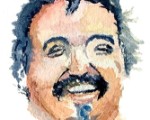
 Here's the section of the actual picture from which it was painted.  It's funny how as we see things we change them. We don't expect paintings to be "picture-perfect," but it surprises me how sometimes we expect people in our life to remember conversations and events and dates and such "perfectly." We can enjoy the creative rendition of the artist in the conversion of reality to canvas, but we can't work to see the point of view of someone else. Why is that? An artist is given a license - even encouragement - to give it their voice. Tamara and I hear that encouragement every week on Idol. "Don't just give me karaoke - make it your own!" the judges urge the contestants. But people in our life don't get the same encouragement. What would it be like if we gave artistic license to everyone around us? |
|
|
|
|
|
|
|